
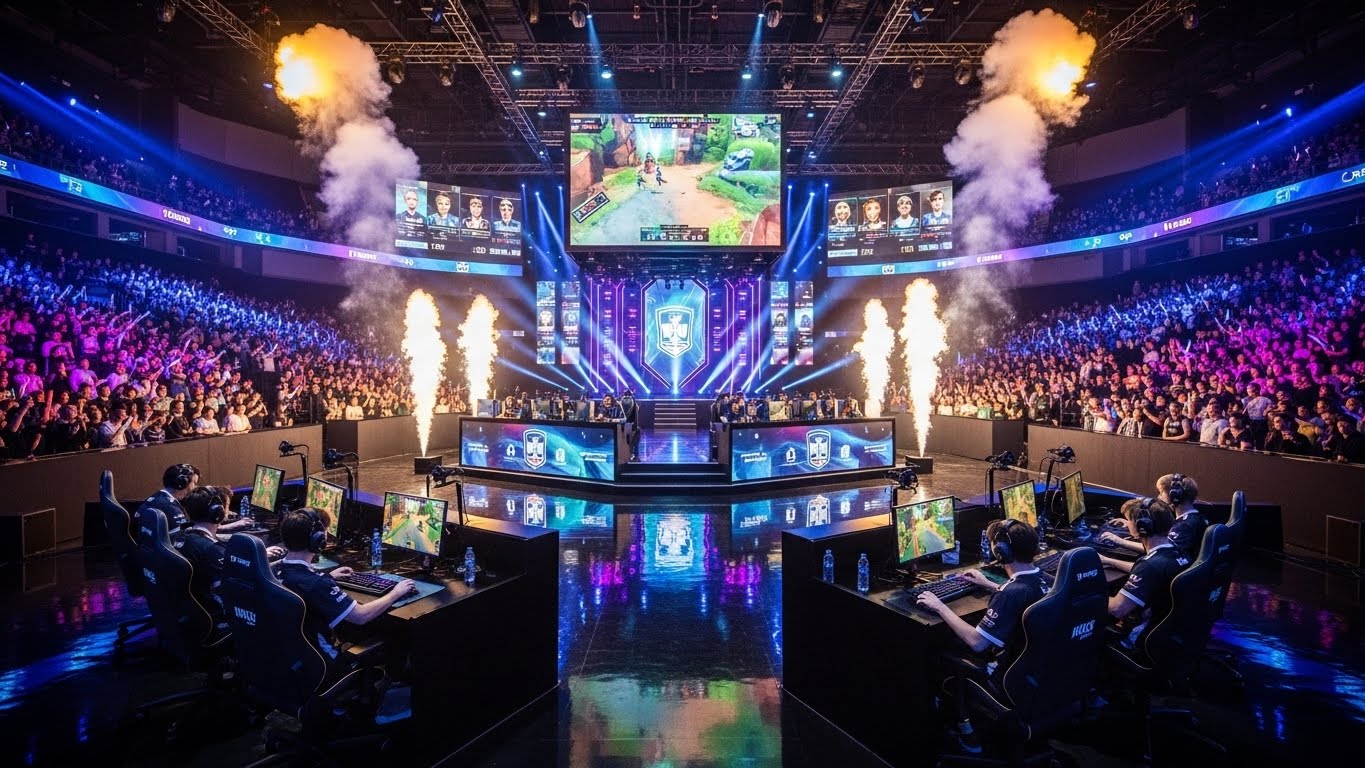
Esports Prize Money Surpassing Traditional Sports Tournaments in Some Categories
A decade ago, most American sports fans treated gaming checks like odd internet trivia. The rise of esports prize money changed that conversation because some gaming events now sit beside, and sometimes above, famous sports purses when you compare event-level payouts. The official 2026 Esports World Cup announcement lists a $75 million total prize pool across 25 tournaments and 24 games, which puts competitive gaming into a money range that can no longer be brushed off as niche. That does not mean esports has beaten the NFL, NBA, MLB, or tennis as a whole. It means the best-run gaming events have found a different way to make prize pools loud, fast, and globally visible. For readers who follow digital media coverage, the story is not “games beat sports.” The smarter story is this: gaming has built payout moments that feel huge, even while older sports still own deeper income systems.
Why Esports Prize Money Is Now Beating Older Sports Math
The first mistake is comparing esports with sports as if both use the same money machine. They do not. Many sports pay athletes through salaries, endorsements, appearance fees, union deals, and season-long revenue. Gaming puts more of its public money on the tournament board, where fans can see it. That makes esports tournament prize pools feel sharper than a salary cap or a quiet bonus system. The number sits on the poster. It becomes part of the event’s drama.
Multi-title events changed the comparison
The Esports World Cup did not become huge by copying Wimbledon or the Masters. It gathered many games under one event banner. That matters because a multi-title setup can add prize pools across different communities: shooters, MOBAs, fighting games, sports games, and mobile titles.
That is why a $75 million event number needs careful reading. It is not the same as one tennis bracket or one golf field. It is more like a festival of finals tied to one master scoreboard. The 2026 event also includes club awards, game championships, player awards, and qualifying paths, so the money moves through several lanes rather than one winner-take-most format.
Here is the counterintuitive part. The spread makes the headline bigger, but it can also make each single game feel less giant than the full number suggests. A Call of Duty team, a chess player, and a Dota roster may all be part of the same event, yet their earning paths are not the same road.
The old Dota model showed what fans could fund
Before the new mega-event model, Dota 2’s The International became the wild example. Esports Earnings lists The International 2021 at more than $40 million, with earlier editions in 2019, 2018, and 2017 also sitting above many famous sport event purses.
That era mattered because part of the pool came from digital fan spending. Fans were not buying a seat in a stadium. They were buying in-game items and feeling tied to the tournament. That link between player economy and prize pool still shapes how people talk about esports tournament prize pools today.
The catch is that this model can swing down fast. If fan spending changes, publisher strategy shifts, or a game loses heat, the public payout can fall. Older sports are slower and heavier. Gaming is quicker, but that speed cuts both ways.
Where Traditional Sports Still Hold the Deeper Paycheck
Traditional sports prize money is easy to misunderstand because the public purse is only one piece of the money. A golf major pays a posted purse. A tennis major pays round-by-round checks. A pro league pays salaries across months. Those are different animals. You can compare them, but you must say what you are comparing.
A purse is not the same as a career
The 2026 U.S. Open golf purse was reported at $22.5 million, with $4.5 million for the champion. That is huge by any normal standard, yet it is smaller than the full 2026 Esports World Cup event pool. On the surface, gaming wins that comparison.
Then the picture widens. A top golfer can earn from weekly events, sponsor logos, equipment deals, appearance fees, and long career value. A strong gaming pro may earn a salary too, but the average career window can be shorter. Reflex, patches, roster changes, and game popularity all press on the player.
So the smarter question is not, “Which event has the bigger top number?” It is, “Which system gives more athletes stable earning power?” That answer is less friendly to gaming.
Legacy events pay through status
Wimbledon’s 2026 prize fund rose to £64.2 million, with men’s and women’s singles champions each set to earn £3.6 million. The number matters, but the status matters more. A Wimbledon win can turn a player into a global name for years.
That is where traditional sports prize money has a hidden edge. It often comes attached to a deep cultural story. Your grandparents may know Wimbledon. Your local news may cover the U.S. Open. Brands know what those events mean without needing a pitch deck.
Gaming is catching up, but it still needs translation for many American households. A $3 million shooter final may be bigger than a smaller golf event on paper, yet a local business owner may understand golf faster than Valorant. Money can move faster than trust.
Why American Fans Should Read the Numbers Carefully
For U.S. readers, the headline can be both true and misleading. Yes, certain gaming events can beat some older tournaments on posted payouts. No, that does not make every gaming pro richer than every athlete in a traditional league. Competitive gaming payouts are real, but they live inside a business that changes by title, publisher, sponsor mood, and streaming attention.
The headline pool can hide the split
A $75 million event sounds clean. The split is not clean. Some money goes to clubs. Some goes to game winners. Some goes through awards or qualifiers. That can still be good for players, but the fan must avoid treating the full pool like one bracket prize.
The same problem appears in older sports. A tennis major may list a huge total, but first-round players, doubles teams, and champions do not receive equal shares. Prize tables tell a story, but they do not tell the whole income story.
This is where gaming has one advantage. Fans are used to checking brackets, payout tables, and team pages online. The audience already behaves like analysts. That habit makes prize talk more open than in some older sports.
College-age players face a different risk ladder
American parents often ask a blunt question: should a gifted teenager chase gaming like a sport? The answer is not a simple yes or no. A player good enough to reach a global final has a real shot at life-changing money. The gap between elite and almost-elite is harsh.
That is not unique to gaming. Golf, tennis, baseball, and soccer are full of near-miss stories. The difference is that esports can change the field under your feet. A balance patch can weaken your main character. A new title can pull viewers away. A publisher can reduce the pool.
That is why gaming industry trends matter as much as raw talent. In older sports, the ball does not get patched overnight. In gaming, the rules can move while the player is still learning them.
What Bigger Gaming Payouts Mean for Brands, Players, and Local Events
Big prize pools are not charity. They are signals. They tell sponsors, publishers, teams, and fans where attention is gathering. Competitive gaming payouts work like bright billboards for an industry that still wants more mainstream respect in the United States. The bigger the posted reward, the harder it becomes for sports media to ignore the scene.
Sponsors are buying proof, not hype
A sponsor does not only care that gamers are young. That line has been used for years. What brands want is proof that the audience shows up, watches, shares clips, buys digital items, and follows teams across games.
The Esports World Cup Foundation said its 2025 event reached 750 million viewers worldwide and generated 350 million hours watched. Those numbers help explain why a huge 2026 prize pool can make business sense for the organizers.
For American brands, the chance is clear but not automatic. A snack company, phone maker, or financial app cannot walk into gaming with a tired sports ad and expect love. Gaming fans notice when a sponsor does not understand the scene. They punish fake energy fast.
Smaller tournaments may feel the squeeze
Huge pools create dreams, but they also create pressure. A local fighting game event in Texas or a college Rocket League final in Ohio cannot compete with a global prize board. It should not try.
Smaller events win through closeness. You can meet players. You can hear the crowd. You can watch unknown talent become dangerous in one weekend. That kind of scene builds loyalty in a way a giant broadcast cannot always copy.
The risk is that fans start judging every event by prize size. That would be a loss. Some of the best sports memories are not from the richest events. They come from rivalries, local pride, and a room full of people who care before the rest of the country catches on. For site owners covering sports and gaming, sports business analysis should keep that human layer in view.
Conclusion
Gaming has earned its seat at the sports money table, but the seat comes with fine print. The biggest pools are no longer cute side stories. They can stand above well-known event purses and pull global attention in a matter of weeks. Still, older sports keep a deep advantage in salary systems, cultural memory, and long-term brand value. That is why esports prize money should be read as a sign of power, not the whole measure of power. The next phase will not be about proving that gaming is “real.” That argument is tired. The better test is whether publishers, teams, sponsors, and event owners can turn giant pools into stable careers and lasting fan trust. Watch the numbers, but watch the structure behind them even more.
Frequently Asked Questions
How much can top esports tournaments pay compared with sports events?
Top gaming events can pass many older sports tournaments when measured by total posted pool. The best comparison is event to event, not industry to industry. A multi-game festival can beat a golf purse while still paying players through a different split.
Is gaming prize money bigger than NFL or NBA pay?
No. The NFL and NBA still dominate through salaries, media deals, endorsements, and long league seasons. Gaming can beat some single-event purses, but it does not yet match the total income system around major American leagues.
Why do esports pools look so large online?
Gaming events often promote the pool as part of the show. The number creates hype, gives teams a clear target, and helps sponsors prove scale. Traditional sports often spread athlete income across salaries, bonuses, and off-field deals.
Which games usually have the largest tournament payouts?
Dota 2, Fortnite, Counter-Strike, League of Legends, PUBG Mobile, Honor of Kings, and some major multi-game events have produced large payouts. The leaders shift because publisher plans, sponsor money, and fan spending can change from year to year.
Are esports players paid only from tournament winnings?
No. Many pros also earn salaries, streaming income, sponsor money, creator revenue, and team bonuses. Tournament winnings still matter because they are public and dramatic, but they are only one part of a serious player’s income.
Why do some esports careers end faster than sports careers?
Game updates, reflex demands, roster churn, travel stress, and title popularity can shorten a career. A player can be elite in one version of a game and struggle after major changes. That makes long-term planning harder.
Should young American players chase esports professionally?
Talent alone is not enough. A serious player needs coaching, school backup, health habits, financial guidance, and a clear read on the game’s future. Treat it like a high-risk sports path, not a casual hobby with prize money attached.
What does bigger prize money mean for the future of sports media?
Sports media will have to cover gaming with more care. Bigger pools bring sponsors, agents, data teams, and mainstream viewers. The best coverage will compare business models, not mock one side or blindly praise the other.